case studies

Real world application stories showing how the X2F machine is used to apply KERAMOLD® 20 for overmolding and encapsulating delicate components, improving thermal management, component protection, and manufacturing readiness.

STUDY 01

Over molding of Battery Management System (BMS)

Demonstrates how KERAMOLD® 20 improves thermal transfer and lowers PCB operating temperatures in BMS applications.

view case study 1

STUDY 02

Thermal Performance of Over-molding vs. Potting 

Compares over-molded and potted designs, highlighting stronger heat dissipation and better long term thermal behavior.

view case study 2

Case Study 1

Over molding of Battery Management System (BMS)

A real world study showing how KERAMOLD® 20 improves thermal management and lowers PCB temperatures in battery management system applications.

Challenge

Increasing heat generation in compact electronic systems requires a material that protects components while improving thermal transfer.

Approach

Compare multiple PCB configurations with and without thermal management materials under controlled operating conditions.

BACKGROUND
Why this study matters
Battery systems in modern electronics generate increasing amounts of heat as power density rises and component layouts become more compact. This creates a need for materials that not only protect sensitive electronics, but also help transfer heat away from critical areas. In this study, X2F evaluated KERAMOLD® 20 as an over molding material for battery management system components to assess its ability to improve thermal management while maintaining the protection and processing advantages of injection molding.
TEST SETUP
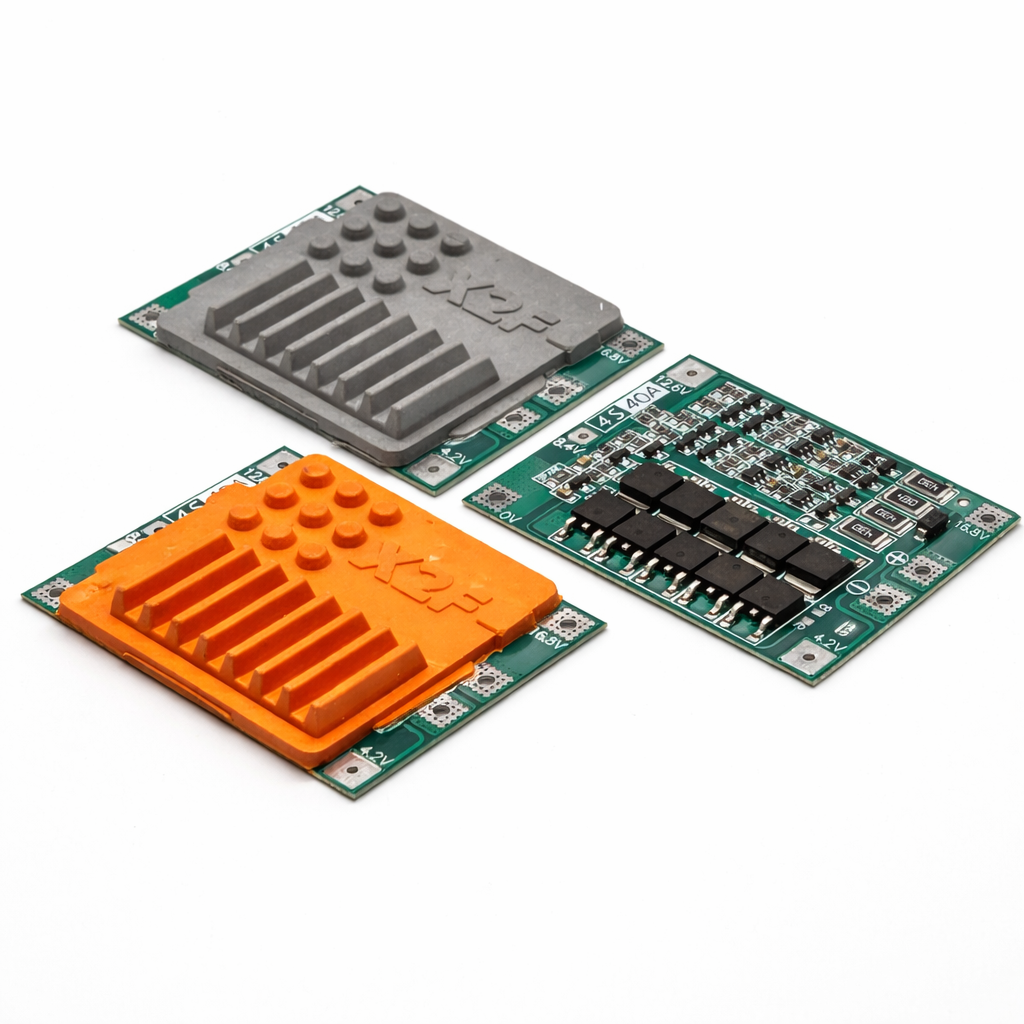
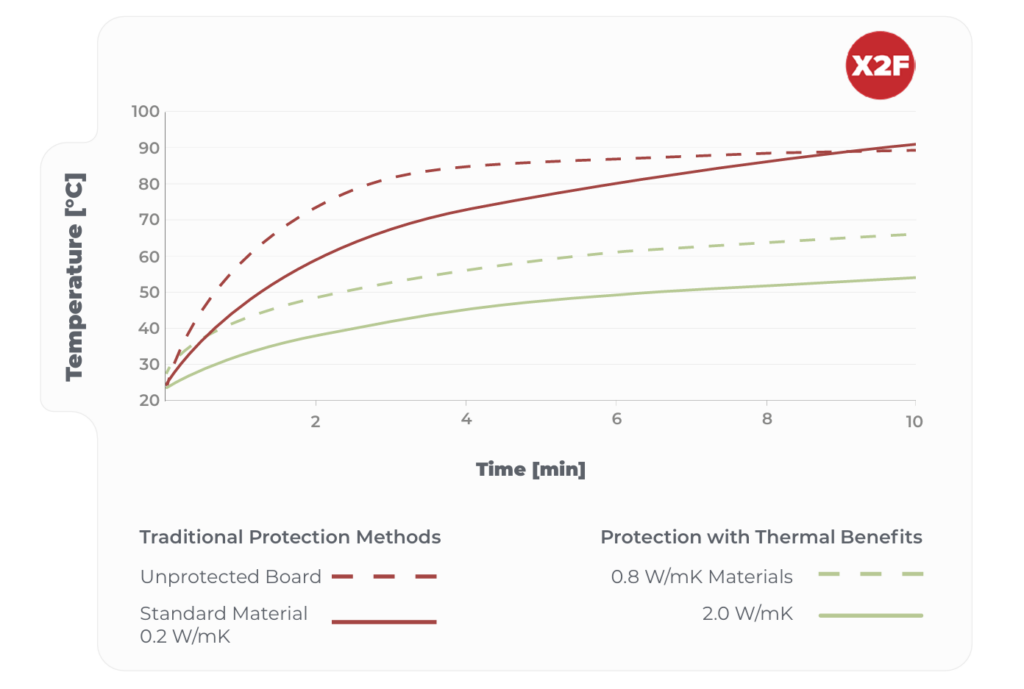
  • Four PCB configurations were tested
  • Each board used a different molding or thermal management approach
  • Thermocouple wires measured temperature at key locations
  • Boards were powered for 10 minutes
  • Readings were recorded every 10 seconds
  • Performance was compared across all samples
KEY RESULT
KERAMOLD® 20 excelled in this study, maintaining PCB temperature at 45°C compared to the PCB temperature with no thermal management solutions at 90°C.
CONCLUSION

KERAMOLD® 20 is able to set new standards for thermal management in the field of injection molding materials.

  • Improved thermal performance
  • Protection against dust and humidity
  • Compensation of vibrations
  • Highly electrically isolating
  • Saves production time compared with conformal coating or potting materials
  • Cost effective solution

Case Study 2

Thermal Performance of Over-molding vs. Potting Materials

A comparative study showing how KERAMOLD® 20 delivers better thermal performance than traditional potting materials in motor applications.

Challenge

Electric motors used in applications such as eBikes must deliver high torque over extended periods without overheating or losing power.

Approach

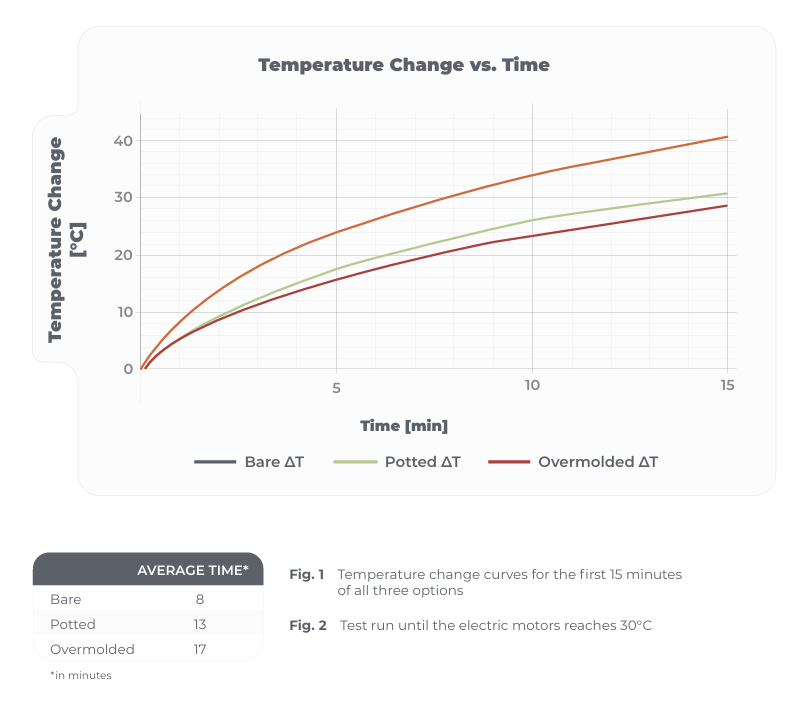
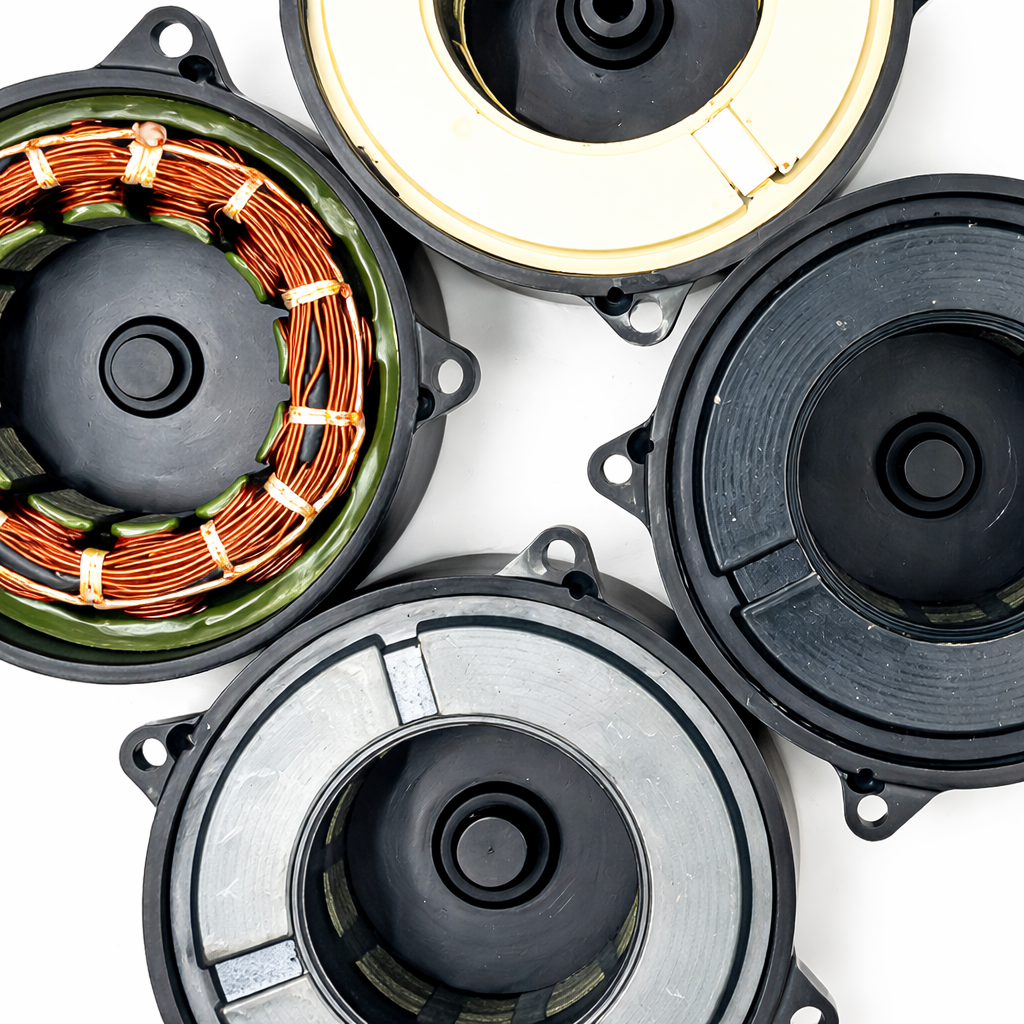
To improve heat dissipation, motor stators are often filled with a potting material. In this case study, electric motors with bare windings, solid potting, and overmolding using KERAMOLD® 20 were tested to demonstrate the differences in thermal performance.

METHODS
The study used a motor dynamometer and thermistors inside the motor housing to measure temperature under controlled operating conditions. Motors were run at steady speed while torque was applied through an eddy current brake, then compared across bare, potted, and KERAMOLD® 20 over-molded configurations to evaluate thermal performance.
RESULTS
KERAMOLD® 20 showed better thermal performance than both potted and bare motor configurations. On average, the over-molded motors maintained lower temperatures for longer periods and took more time to reach 30°C, demonstrating stronger heat dissipation under realistic operating conditions.