

Product development moves faster when teams can test real molded parts earlier.
A digital design can answer only so many questions. Engineering teams need physical parts to evaluate fit, function, material performance, assembly, and other details that are difficult to confirm and validate on a screen or with a 3-D printed part.
Traditional production tooling can delay that learning for weeks and cost thousands. X2F shortens the path from CAD to functional molded parts, allowing teams to test, refine, and improve a design much earlier in the development process at a fraction of the price.
Move from CAD to molded parts in days, not weeks.
The X2F process shortens the path from CAD to functional molded parts by replacing traditional steel tooling with 3D printed cavity tooling.
Because the tooling can be produced in hours instead of weeks, testing can begin much earlier. Engineers can move from a digital design to a molded part that can be evaluated under real operating conditions.
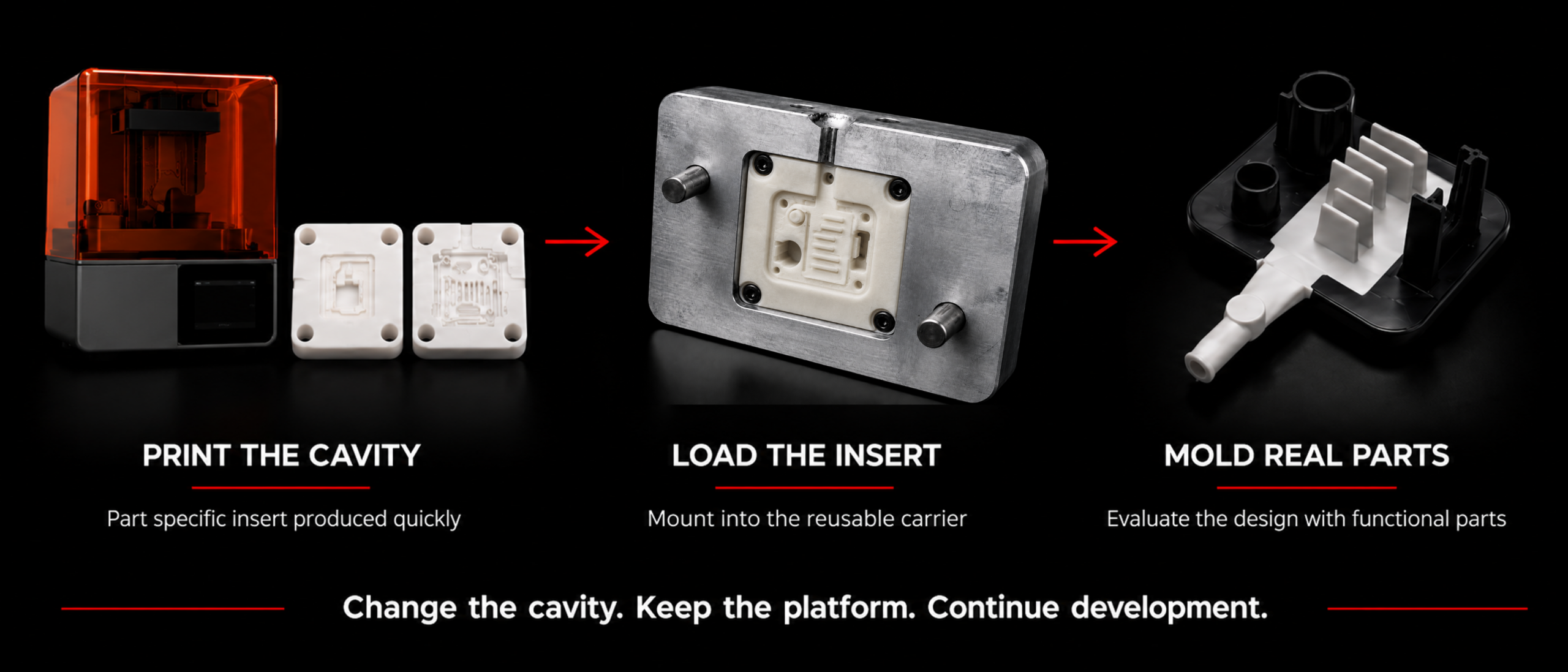
Use each molded part to improve the next version.
The first molded part is not the end of the process. It is the beginning of a faster development loop.
Teams can review the part, identify changes, update the CAD design, print new tooling, and mold the next version. Geometry, material selection, component placement, and other design details can be refined as the product develops.
Because only the cavity tooling needs to change, teams can move from one design iteration to the next at a fraction of the cost, and without rebuilding the entire manufacturing platform.
Make better design decisions earlier.
Rapid development with X2F helps teams:
- Begin functional testing earlier.
- Evaluate production intent materials.
- Improve designs through multiple molded iterations.
- Reduce the time and cost associated with tooling changes.
- Validate design decisions before investing in permanent tooling.
- Respond more quickly to changing product requirements.
Continue developing and producing parts on the same platform.
The same E60Vi platform supports early development, design validation, pilot builds, bridge production, and ongoing manufacturing.
Teams can begin with 3D printed tooling for fast development, then move to aluminum or steel tooling as volume and production requirements increase. The product can scale without being transferred to an entirely different molding platform.
Software and Data
What if your molding process could tell you more?
Every molding cycle contains information about how the process performed. But that information only creates value when teams can access it, understand it, and use it to make better decisions.
From Production Activity to Process Insight
See what is happening, understand what changed, and respond with greater confidence.
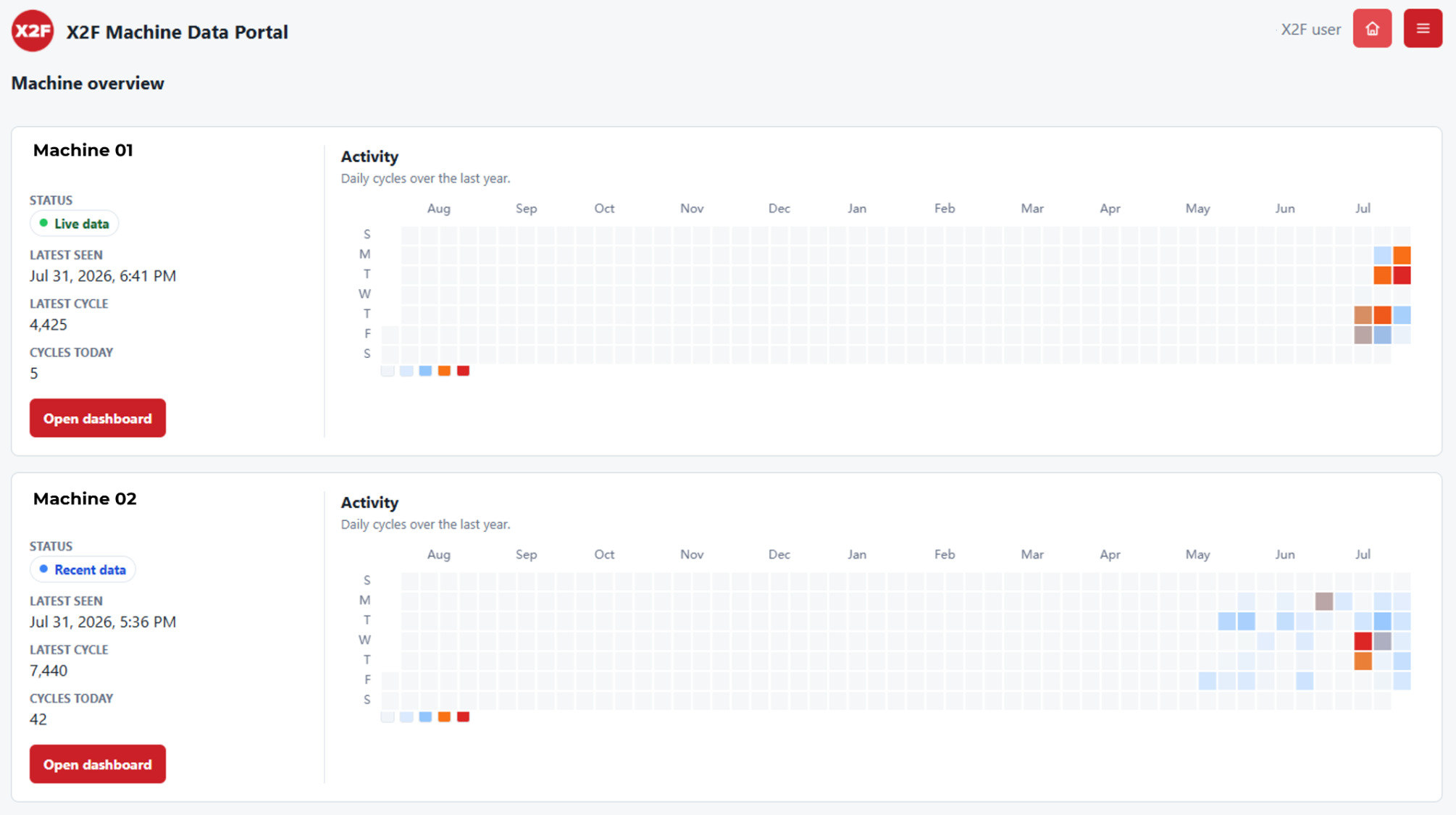
The new X2F Machine Data Portal gives customers secure, remote access to production activity and detailed process data from connected E60Vi machines. Instead of relying only on what can be observed at the machine, engineering and manufacturing teams can review what happened during an individual shot from virtually anywhere.
The X2F Machine Data Portal brings production history and detailed shot data into one connected view. Teams can see when a machine was running, review the number of cycles completed, and move directly from a production day to the individual shots they want to investigate.
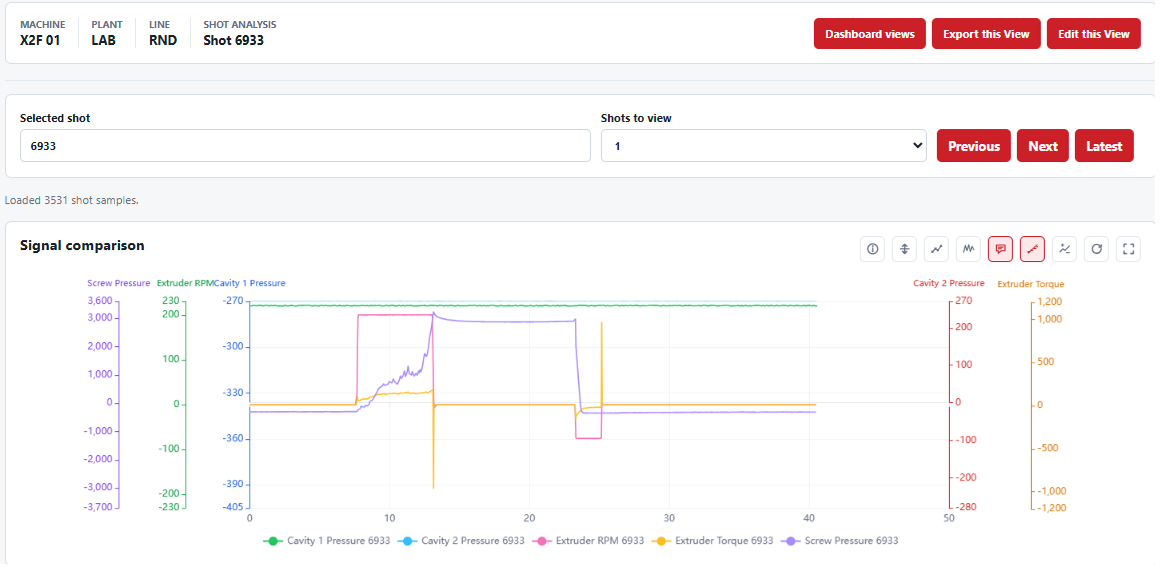
Within seconds of a completed cycle, process signals become available through the Shot Analysis dashboard. This gives users a faster way to compare shots, evaluate process consistency, investigate variation, and understand how the machine responded throughout the cycle.
From Fleet Performance to Individual Shots
See the level of production insight that matters to your role.
The X2F Machine Data Portal is being developed to provide visibility across every level of production. Leaders will be able to review high-level fleet performance, while operations and engineering teams can move from regional or factory-level summaries into the activity of an individual machine and the process data behind a single shot.
This creates a shared view of operations without requiring every user to work at the same level of detail.
Understand performance across the fleet.
Review uptime, machine activity, cycle totals, and production performance across selected regions, countries, or facilities.
Compare activity across locations.
Move from regional summaries into factory and machine-level activity to understand how connected production assets are being used.
Explore the process behind each shot.
Continue from machine activity into individual cycles, shot summaries, settings, and high-speed process signals.
Planned Interactive Fleet View
A planned world-map interface will organize connected machines by location and summarize information at each zoom level. Users will be able to move between custom regions, countries, factories, and individual machines to review measures such as the number of connected machines, total cycles, production activity, and uptime percentage.
High-Resolution Data, Available When It Matters
Look beyond the final part to understand the process that produced it.
Connected X2F machines capture approximately 120 process variables at different sampling rates. High-speed signals, including cavity-pressure response, can be recorded every 10 milliseconds, while cycle settings, machine states, heater information, and shot summaries provide additional process context.
Together, these data help teams understand more than whether a cycle passed or failed. They provide a detailed process record that can be used to:
- Compare consistent cycles with cycles that behaved differently
- Investigate the source of process variation
- Support application and material development
- Review production remotely with customers or technical teams
- Preserve process history for future analysis
- Identify opportunities for process and machine diagnostics
Users can select the information most relevant to their application and export it by shot range or date and time for further review.
The Shot Analysis dashboard brings these signals together in one place, allowing users to compare process behavior and begin investigating a question within seconds of a completed shot.
A Platform That Continues to Learn
The portal creates new opportunities to support customers throughout the life of the process.
The initial release focuses on remote visibility, shot analysis, and flexible data export. As the platform develops, X2F will continue expanding fleet-level reporting and working with customers to identify new ways the available data can support process diagnostics, machine health, application development, and production improvement.
The goal is not simply to collect more data. It is to make the information already being generated by the molding process easier to use and more valuable to everyone from executive leadership to the engineers evaluating an individual cycle.
Application in Action
See how X2F capabilities come together in a real molded assembly.
X2F creates the most value when materials, components, and manufacturing requirements work together. Motor stator encapsulation demonstrates how multiple functions can be integrated into one molded assembly.
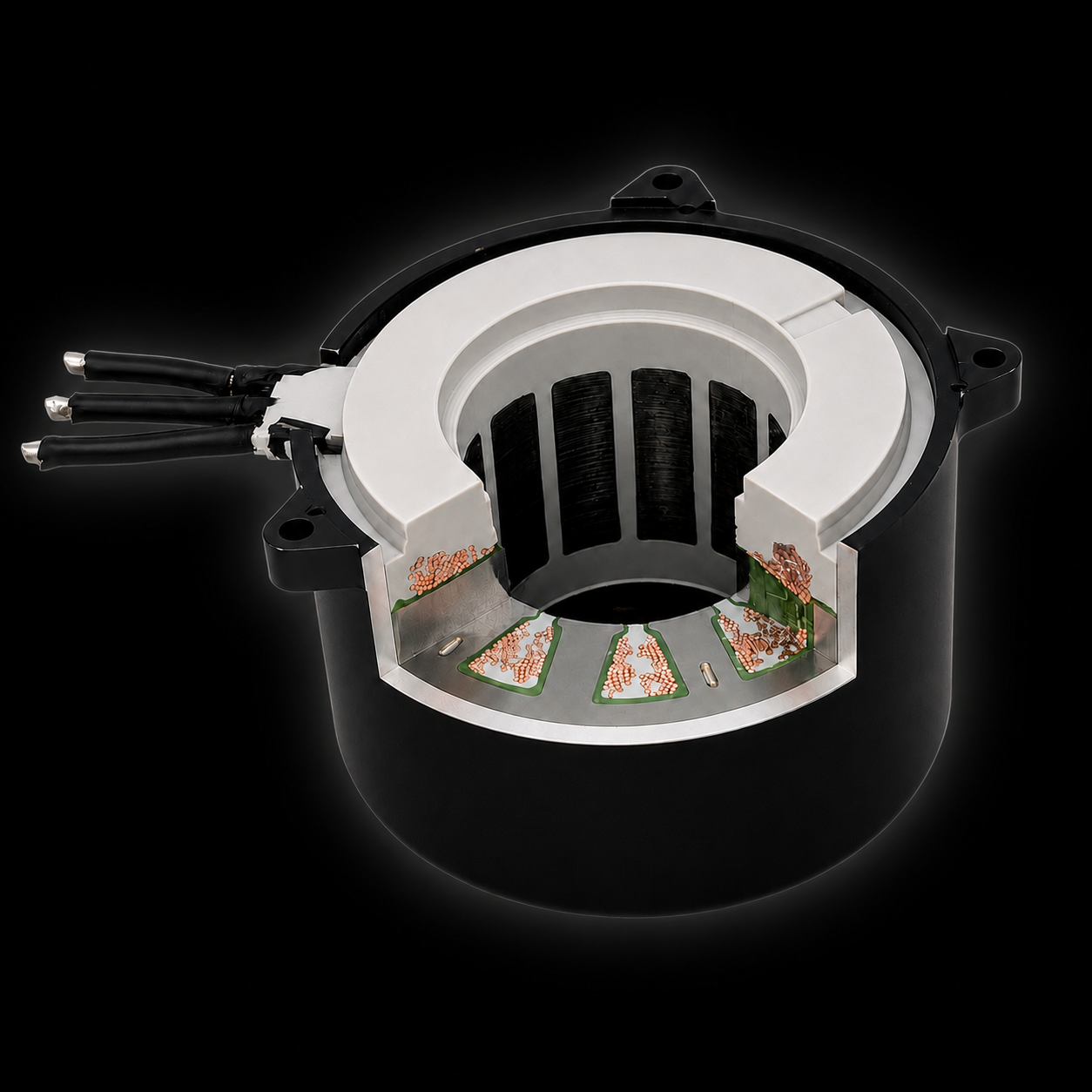
Motor Stator Encapsulation
X2F molds around coils, windings, sensors, and wires to create a more integrated motor assembly. This approach can reduce part count and assembly steps while building thermal management, component stability, and environmental protection into the molded structure.
- Fewer parts and assembly steps
- Integrated thermal management
- Built in component protection
Where to See X2F Next
Meet the X2F team this fall at industry events across the United States and Europe. See the technology, discuss your application, and learn how X2F supports advanced materials, complex components, and production-ready development.

COMPOSITES AND ADVANCED MATERIALS
X2F presents at CAMX 2026.
X2F will be presenting at CAMX, where composites and advanced materials leaders come together to explore new materials, processes, and manufacturing technologies.
Rick Fitzpatrick, X2F Founder and Chief Technology Officer, will explore how X2F’s in-situ compounding process combines long-fiber carbon fiber composites with commodity resins at injection molding speeds.
The presentation will include ASTM test data demonstrating tensile strength improvements ranging from 104% to 190% across polypropylene, nylon, polycarbonate, and PEI.
These results were achieved using 6 mm carbon fiber introduced directly at the molding machine, eliminating the need for pre-compounding while creating new opportunities for high-rate manufacturing of structural thermoplastic components.
MEET X2F IN EUROPE
See the X2F platform at two major plastics-industry events.
PLASTICS DESIGN AND MANUFACTURING
Kunststoffenbeurs 2026
Connect with X2F at Kunststoffenbeurs, a leading event for plastics product development and manufacturing in the Benelux region.
Visit Booth 118 to discuss advanced materials, complex molding applications, and opportunities to accelerate product development with the X2F platform.

PLASTICS PROCESSING AND PRODUCTION
Fakuma 2026
X2F will exhibit with µ-Tec at Fakuma to showcase how the X2F molding platform supports complex applications, advanced materials, and production-ready development.
An X2F machine will be present at the booth, giving attendees an opportunity to see the platform and discuss potential applications directly with the team.
START A CONVERSATION
Have an application you would like to discuss?
Connect with the X2F team before the event to schedule a conversation about your material, component, or product-development requirements.